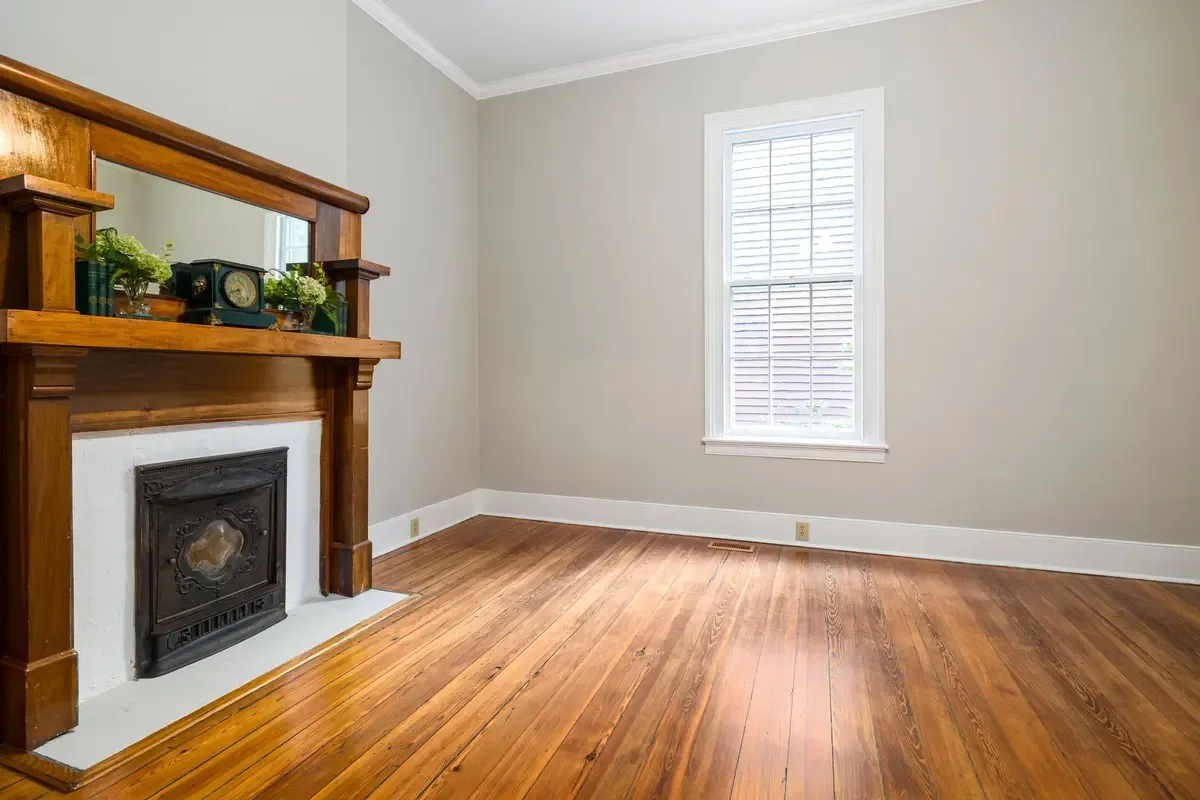
Hardwood has always been at home in North Carolina. Walk into an older house in Garner or downtown Raleigh and you will often find oak floors that have been there for generations. When people shop for new hardwood today, though, the first decision is not the species or the color. It is whether to choose solid or engineered, and in the Triangle that question usually comes back to what is under the house.
Most older homes here, and plenty of newer ones, sit on a crawlspace. That is good news for hardwood, as long as the crawlspace is dry. This guide explains the two products and how to choose between them for your home.
What is the difference between engineered and solid hardwood?
Solid hardwood is one piece of wood, top to bottom, usually three quarters of an inch thick. It is nailed to a wood subfloor and can be sanded and refinished many times over its life.
Engineered hardwood has a real hardwood top layer, called the wear layer, bonded to a core of cross-layered plywood or a similar stable material. From the top, it looks and feels like real wood, because it is real wood. Underneath, the layers run in different directions, which makes the plank far less likely to cup or gap as humidity changes.
Both are genuine hardwood floors. The difference is in how they handle moisture and how many times they can be refinished.
Can solid hardwood go over a crawlspace?
Yes. A crawlspace with a plywood or OSB subfloor on joists is the traditional setting for solid hardwood, and it is how most of the original oak floors in the Triangle were installed.
The condition is moisture. A crawlspace that stays damp all summer pushes moisture up into the subfloor and into the bottom of the boards. The bottom of each board swells more than the top, and the floor starts to cup: the edges rise and the middle dips. In bad cases, boards crown or buckle.
Before solid hardwood goes in, a good installer checks:
- The moisture content of the subfloor and the new wood, so they are within the range the manufacturer specifies.
- The crawlspace itself: a vapor barrier covering the ground, foundation vents or an encapsulation system, and no standing water.
- Gutters and grading. Red clay drains slowly, and water that pools along the foundation after a storm ends up under the house.
- Soft or damaged subfloor sections, which need to be replaced first.
With a dry crawlspace and a sound subfloor, solid hardwood performs well in our climate.
When is engineered hardwood the better choice?
Engineered hardwood earns its place in a few common Triangle situations.
Crawlspaces that are borderline damp
If the crawlspace has a history of moisture and you are not ready to encapsulate it, engineered hardwood tolerates the seasonal swings better. It is not a fix for a wet crawlspace, but it is more forgiving of a house that runs a little humid in August.
Slab foundations and basements
Many newer homes and townhomes around Garner, Clayton and Fuquay-Varina are built on a slab. Solid hardwood is not meant to go directly on concrete. Engineered hardwood can be glued down or floated over a slab with the right moisture barrier. Finished basements fall into the same category.
Wide planks
Wide boards move more than narrow ones. If you love the look of seven- or eight-inch planks, engineered construction keeps them flatter through our humid summers and dry, heated winters.
Matching heights
Engineered planks come in several thicknesses, which can help when a new floor has to meet existing tile, carpet or an older hardwood room without a tall transition.
How many times can each floor be refinished?
This is where solid hardwood still has an edge.
Solid hardwood has a thick layer of wood above the tongue, so it can be sanded and refinished several times over decades. That is why so many original Triangle floors are still going strong. If you plan to stay in the house for a long time, that matters.
Engineered hardwood can be refinished too, but only as many times as its wear layer allows. A thin wear layer may only take a light screen and recoat. A thicker wear layer can be fully sanded once or more. When you compare engineered products, ask about wear layer thickness, not just the overall thickness of the plank.
If your existing floors are worn rather than damaged, you may not need new wood at all. Our hardwood refinishing service brings original floors back to life, and it is often the first thing worth considering in an older home.
How is each one installed?
Solid hardwood is nailed or stapled through the tongue into a wood subfloor. That is the traditional method over a crawlspace, and it gives the floor a firm, quiet feel underfoot.
Engineered hardwood is more flexible. Depending on the product, it can be nailed down over a wood subfloor just like solid, glued directly to a slab, or floated over an underlayment. Each method has its own requirements for flatness and moisture, and the manufacturer's instructions decide which ones are allowed. Following them is also what keeps the product warranty in force.
Whatever the method, the wood should acclimate in the house with the heat or air running before it goes down, so it settles to the conditions it will live in.
How do pets, kids and red clay affect hardwood?
Every hardwood floor scratches. The question is how much it shows.
- Harder species like white oak and hickory resist dents better than softer woods.
- Matte and satin finishes hide scratches far better than gloss.
- Wire-brushed and textured surfaces disguise everyday wear.
- Lighter, natural tones show less dust and red clay than very dark stains.
Big dogs, active kids and a back door that opens to a clay yard all point toward a harder species with a low-sheen, textured finish. A good mat at each door matters just as much, because tracked-in grit is what dulls a finish fastest.
For kitchens and laundry rooms where water is a regular visitor, many families keep hardwood in the living areas and use waterproof flooring where the water is.
How do you decide between engineered and solid?
A practical way to think about it:
- **Dry crawlspace, plywood subfloor, long-term home:** solid hardwood is a strong choice.
- **Slab foundation or basement:** engineered hardwood.
- **Wide planks or a crawlspace that runs damp:** engineered hardwood, plus a plan for the crawlspace.
- **Original oak floors under carpet:** look at refinishing before you buy anything new.
At Southern Flooring Solutions, Tim and Sandy bring both solid and engineered samples to your home, so you can see them in your own light and next to your cabinets. We sell first-quality products only, never discontinued lines, and jobs sold at the initial in-home consultation carry a lifetime labor warranty. Learn more on our hardwood flooring page, or if you live in Garner, Cary or anywhere nearby, request a free in-home estimate and we will look at the subfloor, the crawlspace and the rooms together.