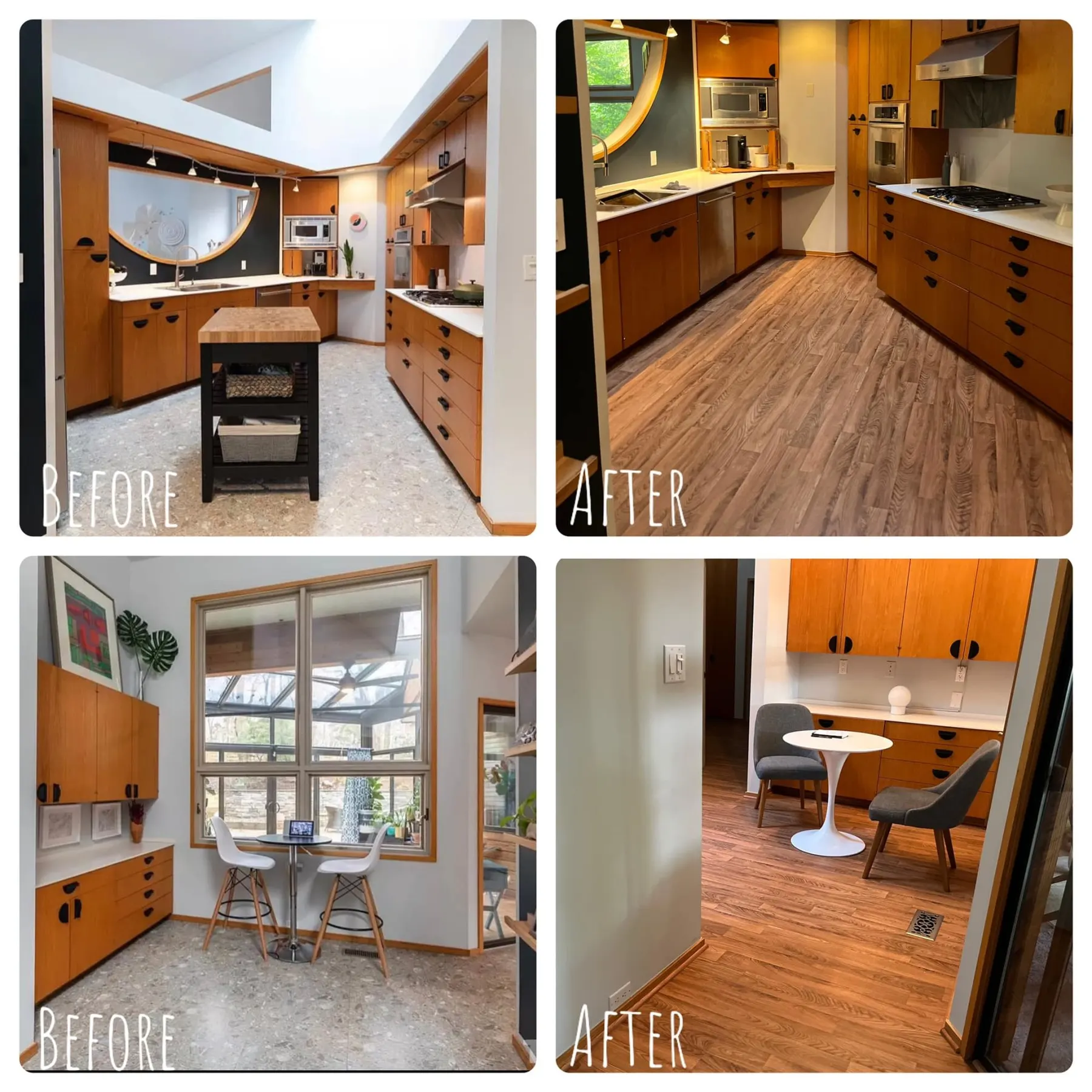
Floor Removal & Prep
Every new floor sits on whatever was left behind by the old one. Leftover adhesive, a cracked slab, a soft spot in the plywood or a layer of old vinyl nobody knew was there can all undermine a beautiful new floor. We tear out old carpet, tile, vinyl and wood, haul it away, and prepare the subfloor and underlayment before anything new goes down. It is the least glamorous part of a flooring job, and the one that decides how long the new floor lasts.
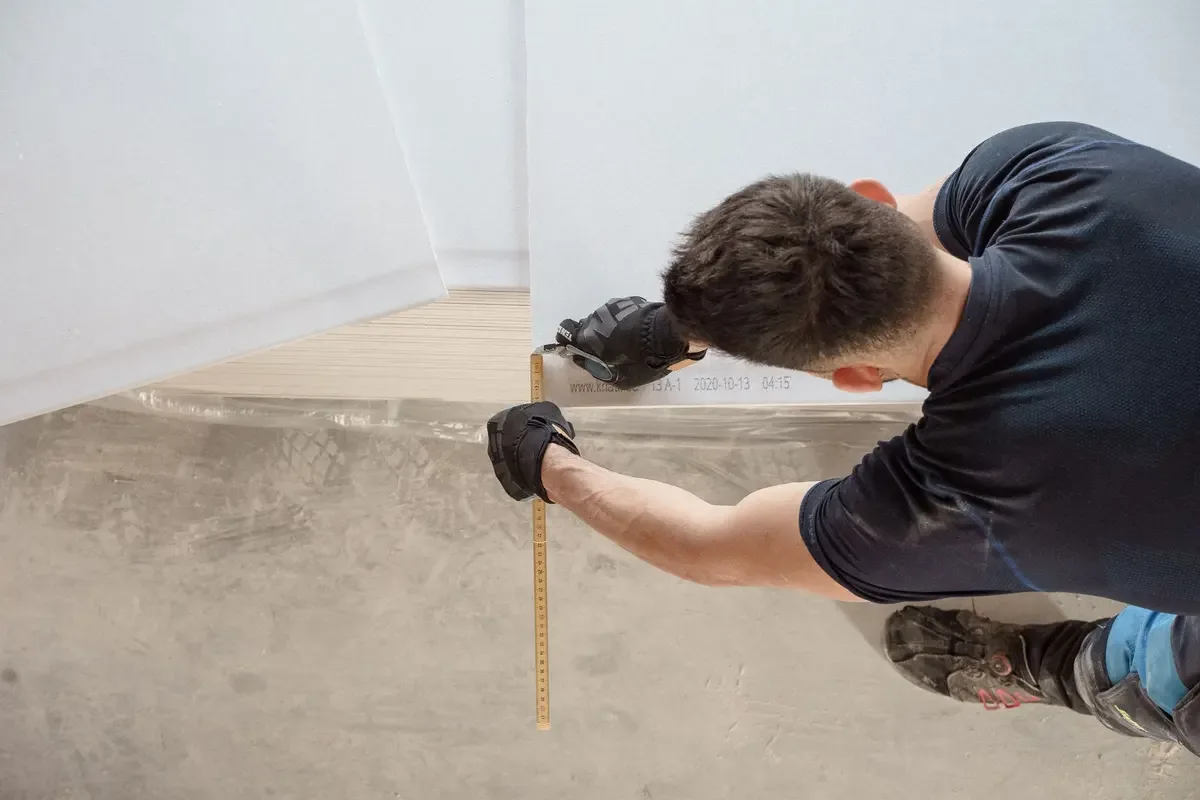
A good floor starts with a clean, sound base
Why we do our own tear-out
When a separate crew rips out the old floor, the installer inherits whatever they left behind: staples, glue ridges, chipped concrete. By handling floor removal in Garner, NC as part of the same job, we see the subfloor with our own eyes and plan the prep around what is really there.
Disposal included in the plan
Old flooring is heavy and bulky. Carpet alone fills a truck bed quickly. We remove and dispose of it so the only thing left in the room is a clean subfloor ready for prep.
What's included
- Removal of old carpet, pad, tile, vinyl, laminate and wood flooring
- Carpet disposal and debris hauled away
- Subfloor checked for soft spots, squeaks and flatness
- Slab prep for floors going over concrete
- Underlayment chosen for the new floor and the room
- Removal and prep planned into the same job as your new floor
Every floor comes up a little differently
Carpet and pad
The fastest removal, but the tack strip and staples left behind have to come up too, or they will show through a hard floor. We pull it all and dispose of the carpet.
Tile and old vinyl
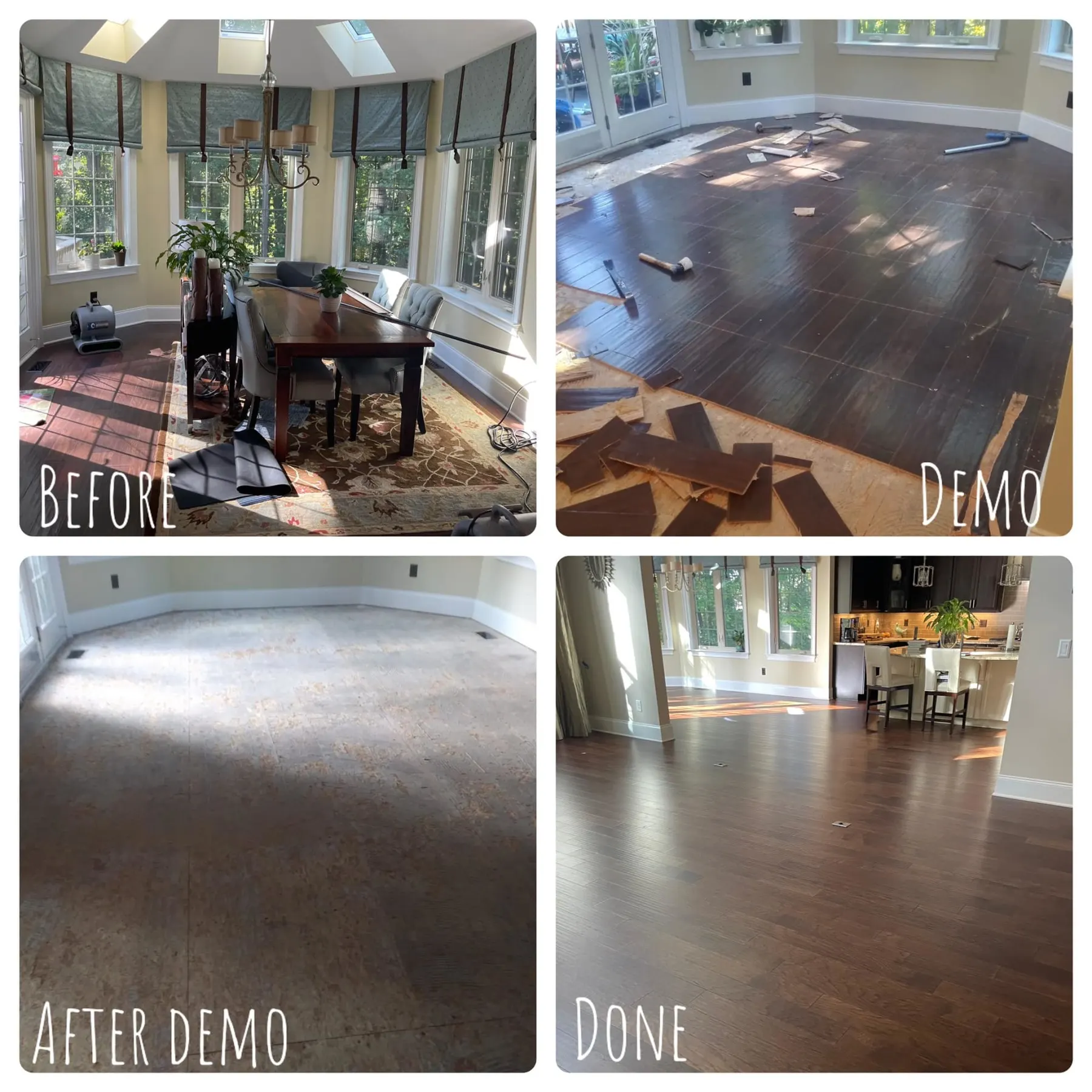
Tile is set in mortar, and old sheet vinyl is often glued down hard. Both take patience to remove without damaging the subfloor beneath. Our sunroom project in the gallery shows the stages: before, during demolition, after demolition and finished.
Wood and laminate
Floating floors come up quickly. Nailed or glued wood takes longer, especially if the plan is to keep the subfloor in good shape for the new floor.
Tile is set in mortar, and old sheet vinyl is often glued down hard.
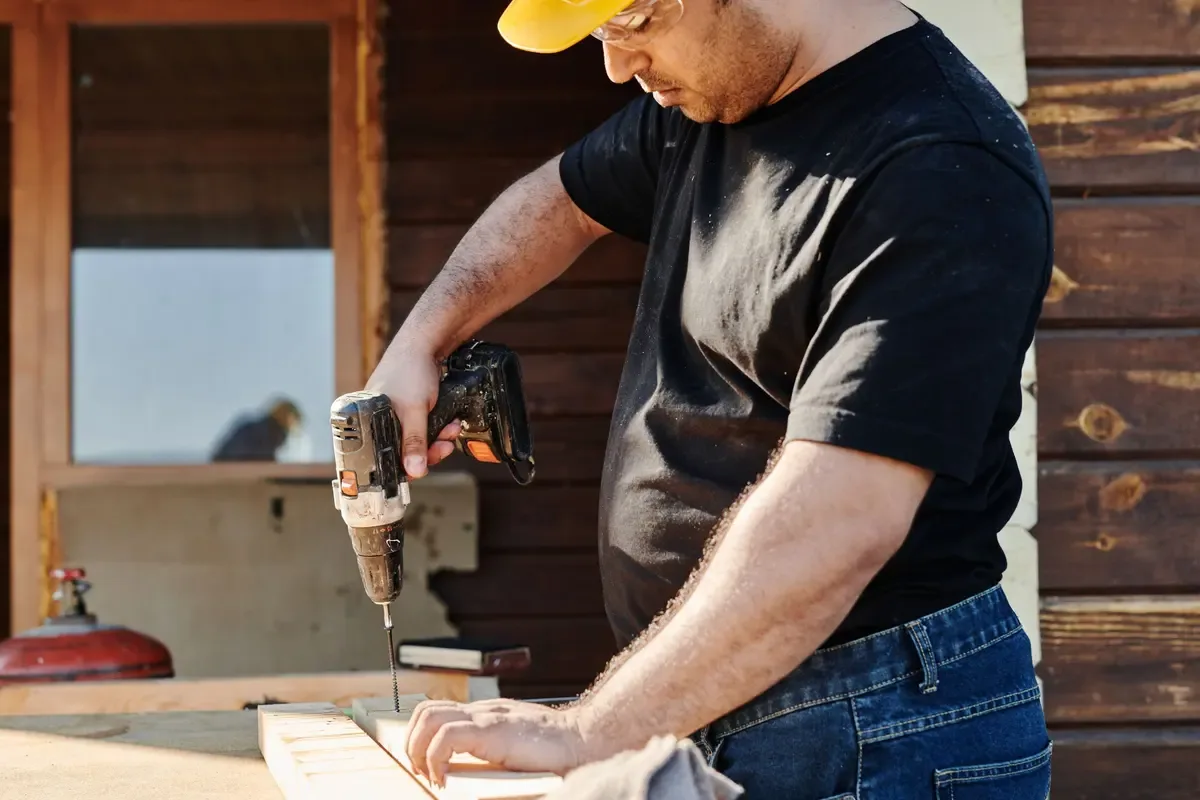
Floor Removal & Prep we've installed
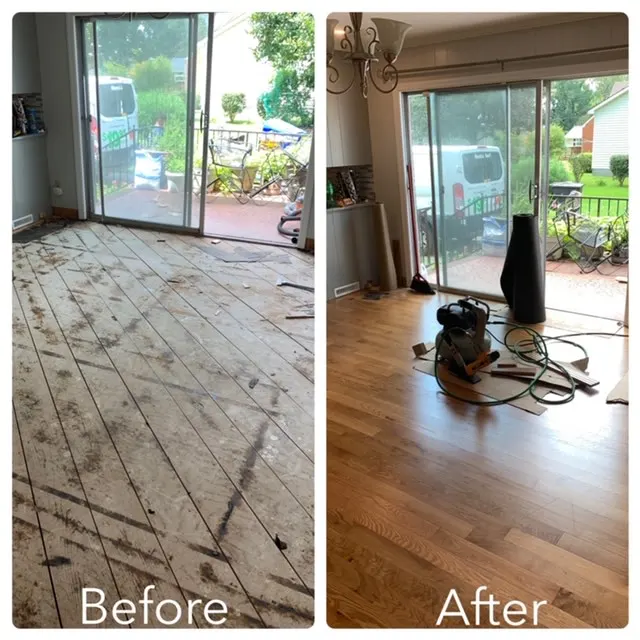
Flat, dry and solid before anything goes down
Wood subfloors over crawlspaces
Many Triangle homes have plywood or plank subfloors over a crawlspace. We screw down loose areas to quiet squeaks, look closely at spots that feel soft, and check flatness against the requirements of the floor you have chosen.
Concrete slabs
Slabs can have cracks, humps and low spots, and moisture can come up through them. We check flatness, deal with leftover adhesive and follow the manufacturer's requirements for moisture protection before the new floor goes down.
Underlayment
The right underlayment depends on the floor and the room. It can add a moisture barrier over a slab, cushion and sound control upstairs, or a smoother surface for vinyl. We choose it to match your floor's requirements, because the wrong one can cause problems the floor itself gets blamed for.
Slabs can have cracks, humps and low spots, and moisture can come up through them.
Floor Removal & Prep questions
Can the new floor just go over the old one?
Sometimes. Some floating floors can go over a single layer of flat, well-bonded sheet vinyl or tile. But going over an old floor raises the height at doorways and appliances, hides problems underneath, and can void a manufacturer's warranty if the base does not meet their requirements. Carpet always comes out. We will tell you whether removal is necessary or optional for your project.
What happens to the old flooring?
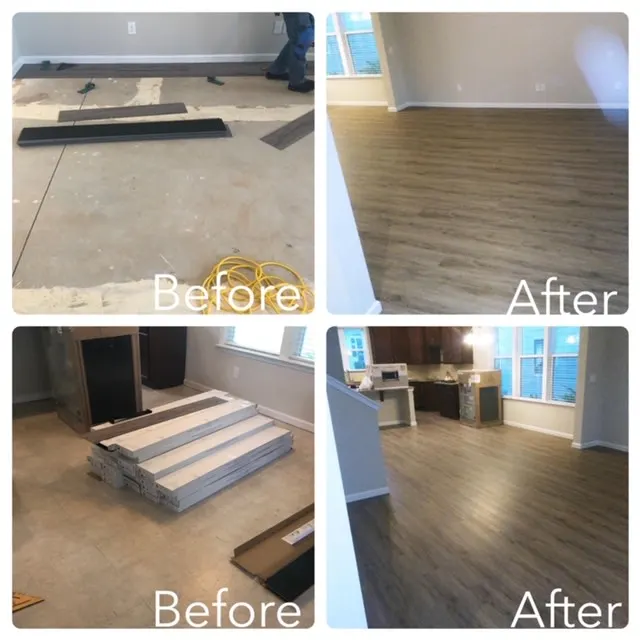
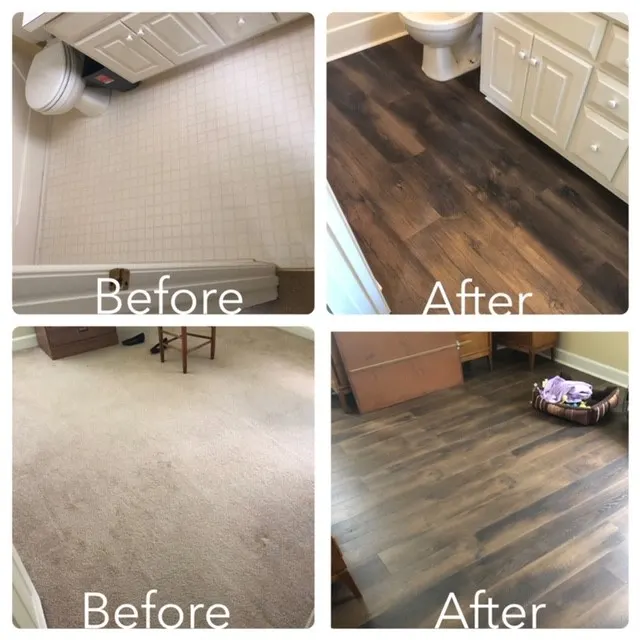
We take it with us. Carpet, pad, tack strip, broken tile and old planks are loaded up and hauled off as part of the job, so you are not stuck with a pile in the garage or at the curb waiting for bulk pickup. Our before and after photos of tile and carpet replaced with new plank show what a cleared room looks like before the new floor goes in.
What do you look for once the old floor is up?
On a wood subfloor over a crawlspace, we look for soft or stained plywood, loose panels that squeak and signs of past leaks around toilets, tubs and dishwashers. On a slab, we look for cracks, high and low spots, and leftover adhesive. Whatever we find, we explain it before we start fixing anything.
Is tile removal messy?
It is the dustiest and noisiest removal job we do. Tile and the mortar beneath have to be broken up and scraped off, and some of that dust travels. We contain the work area as well as the space allows and clean up when the work is done. It helps to move belongings out of nearby rooms and plan for some noise.
Financing for 60 months
0% financing plans for 12, 24, 36, 48 and 60 months on approved credit. The 0% plans carry an additional cost, which we explain up front.
Floor Removal & Prep by city
- Raleigh Floor Removal & Prep
- Durham Floor Removal & Prep
- Cary Floor Removal & Prep
- Apex Floor Removal & Prep
- Chapel Hill Floor Removal & Prep
- Wake Forest Floor Removal & Prep
- Rocky Mount Floor Removal & Prep
- Wilson Floor Removal & Prep
- Fuquay-Varina Floor Removal & Prep
- Goldsboro Floor Removal & Prep
- Garner Floor Removal & Prep
- Morrisville Floor Removal & Prep
- Holly Springs Floor Removal & Prep
- Clayton Floor Removal & Prep
- Smithfield Floor Removal & Prep
- Dunn Floor Removal & Prep
- Wendell Floor Removal & Prep
- Zebulon Floor Removal & Prep
- Selma Floor Removal & Prep
- Knightdale Floor Removal & Prep
- Angier Floor Removal & Prep
- Louisburg Floor Removal & Prep
- Benson Floor Removal & Prep
- Franklinton Floor Removal & Prep
- Rolesville Floor Removal & Prep
- Elm City Floor Removal & Prep
- Lucama Floor Removal & Prep
- Youngsville Floor Removal & Prep
- Sanford Floor Removal & Prep
- Fayetteville Floor Removal & Prep
- Middlesex Floor Removal & Prep
- Oxford Floor Removal & Prep
- Wilmington Floor Removal & Prep
Other services
-
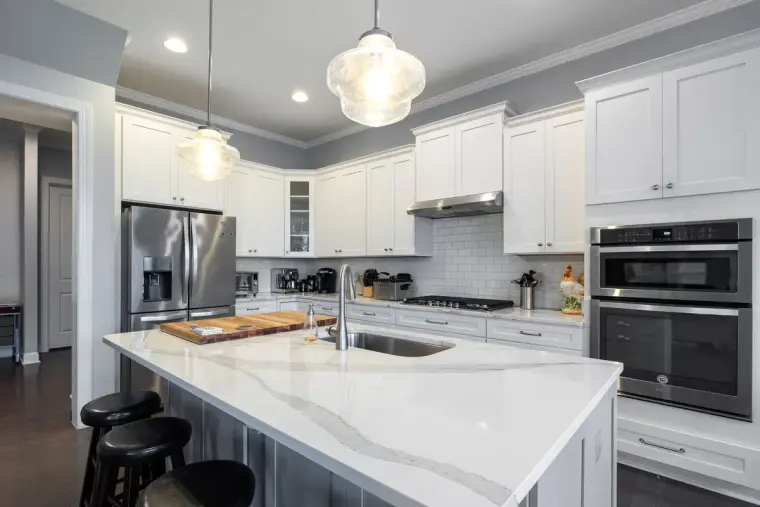
Kitchen & Bath Cabinets
Kitchen cabinets and bathroom vanities in your sizes, finishes and hardware, planned with our in-house cabinetry designer.
Learn more → -
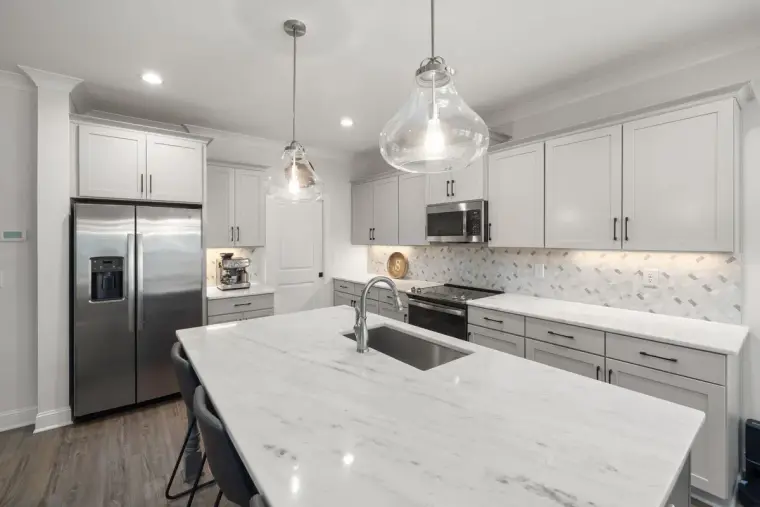
Countertops
Quartz, granite and other countertops for kitchens and baths, measured to your new cabinets and finished with a matching backsplash.
Learn more → -
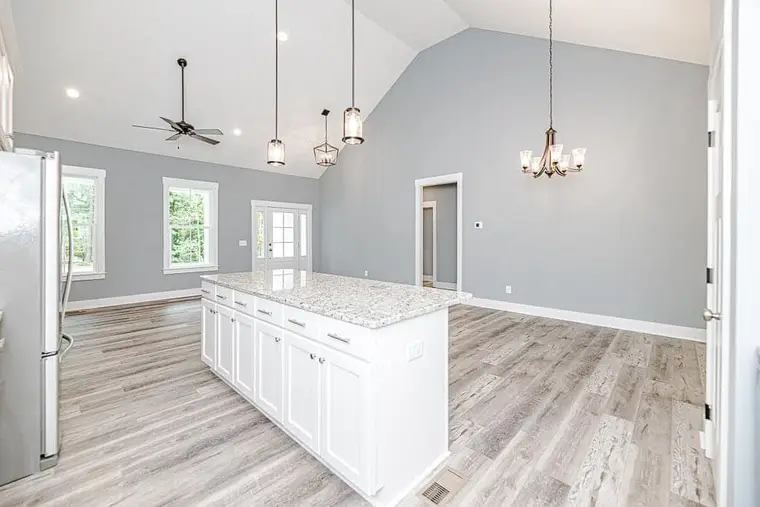
Luxury Vinyl Plank
Waterproof luxury vinyl plank for kitchens, baths and busy main floors, with the wear layer and core matched to your household.
Learn more → -
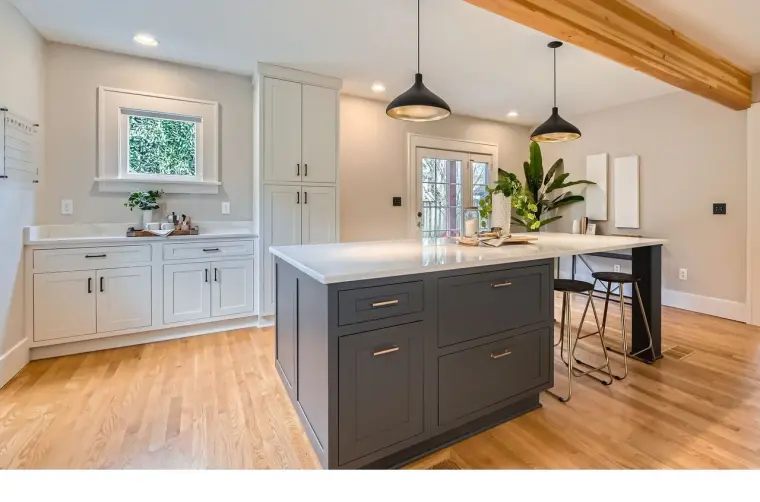
Hardwood Flooring
Solid and engineered hardwood chosen for your subfloor and installed for North Carolina humidity, so it stays flat and tight.
Learn more → -

Waterproof Flooring
Waterproof vinyl plank, water-resistant laminate and porcelain tile for kitchens, baths, laundry rooms and slab homes.
Learn more → -
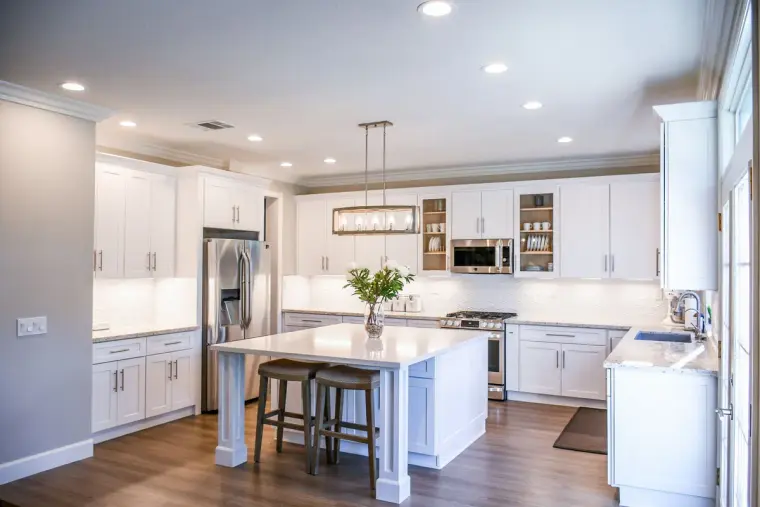
Kitchen Remodeling
Floors, cabinets, countertops and backsplash for your kitchen, chosen together and installed by one team, so every piece fits the one next to it.
Learn more →
Floors, cabinets and countertops, done by one team.
Book an in-home consultation and see samples in your own light. Lifetime labor warranty on jobs sold at the consultation.