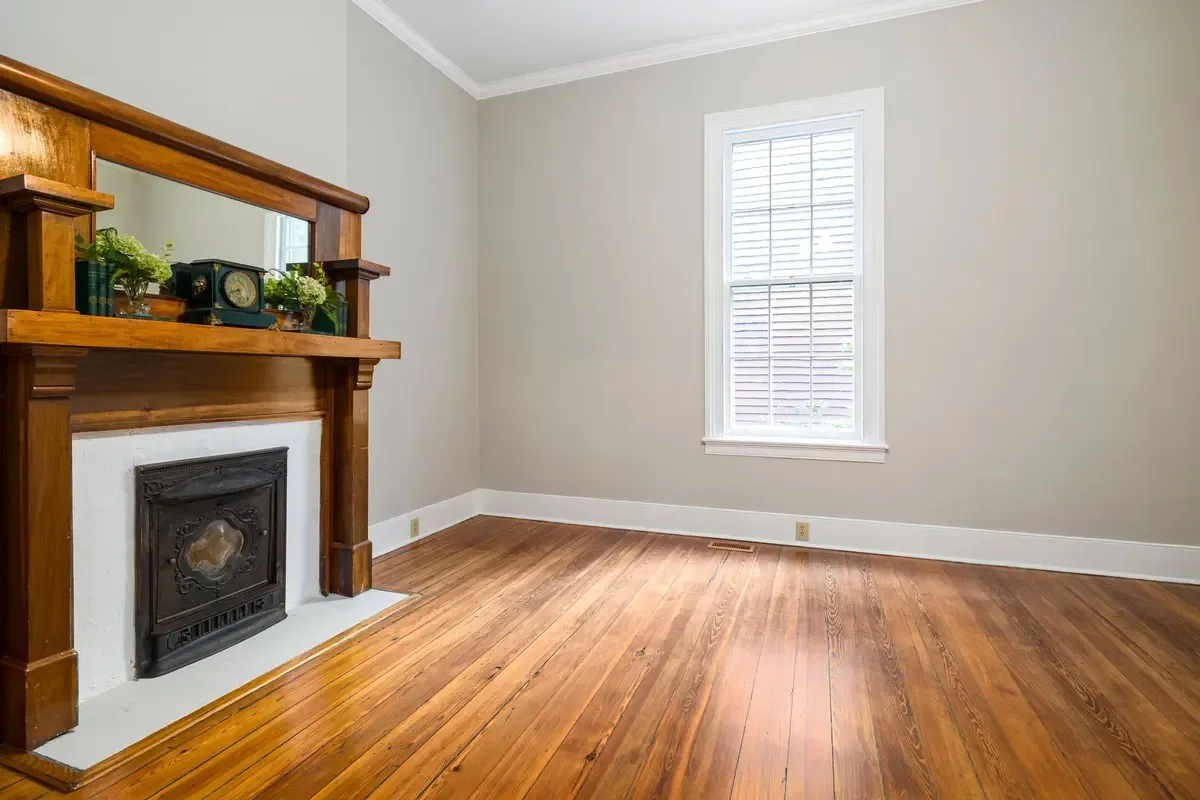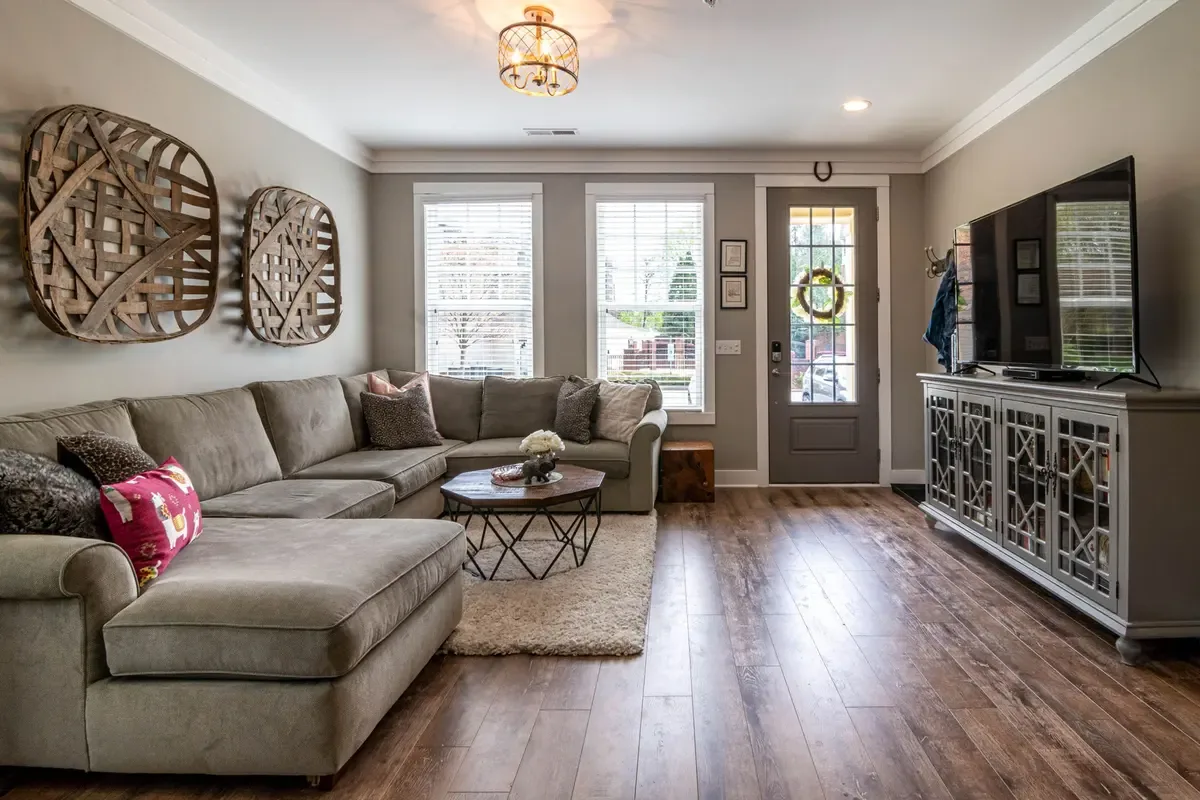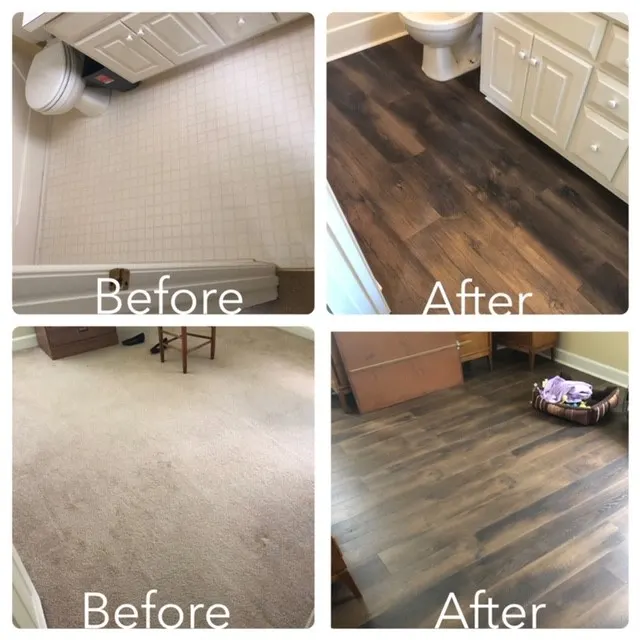
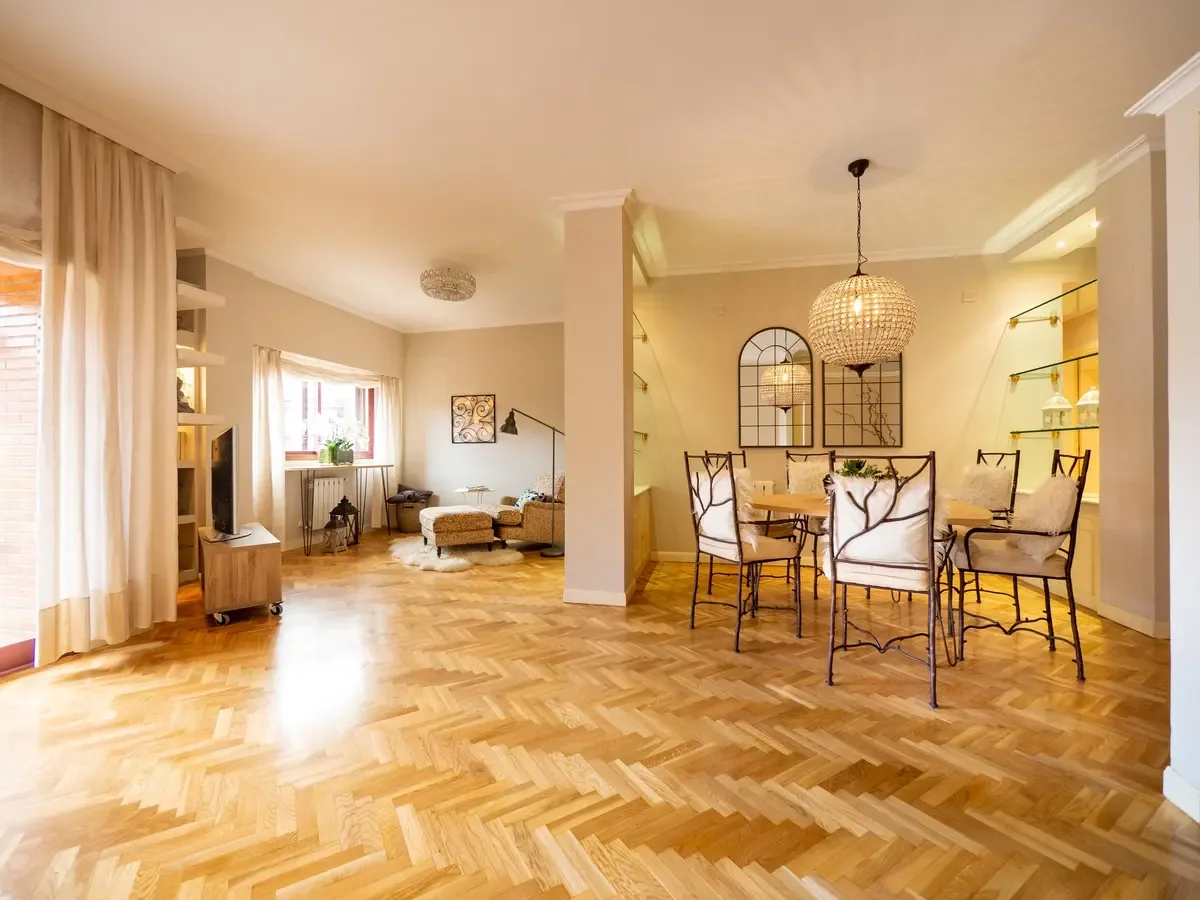
Pull up the carpet in an older house in Garner, Raleigh or Smithfield and there is a good chance you will find hardwood underneath. Oak strip floors were standard in Triangle homes for decades, and some older houses still have heart pine. Many of those floors look tired: gray, scratched, stained or patched. The question is whether they need to be replaced, or whether a refinish will bring them back.
More often than people expect, the answer is refinish. This guide explains how to tell.
What does refinishing hardwood actually involve?
There are two levels of work, and it helps to know which one you are talking about.
Screen and recoat
A screen and recoat lightly abrades the existing finish and applies a fresh coat on top. It does not touch the wood itself. It is the right choice when the finish is dull and lightly scuffed but the wood underneath is in good shape and you are happy with the color. It is quicker and less disruptive than a full refinish, and done every few years it extends the life of a floor considerably.
Full sand and refinish
A full refinish sands the floor down to bare wood, removing the old finish, surface scratches and most stains. Then the floor can be stained a new color, or left natural, and sealed with several coats of finish. It is the right choice when the scratches go through the finish into the wood, when the finish has worn through in traffic lanes, or when you want a different color.
Our hardwood refinishing page covers the process and finish options.
How do you know if your floor can be refinished?
Most solid hardwood floors can be sanded several times. A few things will tell you whether yours has life left.
- **Thickness above the tongue.** Look at a floor register or the edge of a stair tread. If there is a good amount of wood above the tongue, there is room to sand. If the tongue or nail heads are close to the surface, the floor may have been sanded too many times already.
- **Engineered or solid.** Engineered floors can only be sanded if the wear layer is thick enough. A thin wear layer may take a recoat but not a full sand.
- **Firmness underfoot.** Soft, spongy spots usually point to subfloor damage, which has to be fixed before any refinishing.
- **Flatness.** Mild unevenness sands out. Severe cupping or crowning usually means a moisture problem that has to be solved first.
When is replacing hardwood the better choice?
Refinishing cannot fix everything. Replacement, either of some boards or the whole floor, makes more sense in these cases:
- **Deep pet stains.** Urine that has soaked into oak turns the wood black. Sanding lightens surface stains but rarely removes deep ones. Those boards usually need to be cut out and replaced.
- **Water damage.** Boards that have cupped, cracked or rotted from a leak or flooding need replacing, and the source of the water needs fixing.
- **Worn-through boards.** If a previous sanding left the tongues exposed, there is nothing left to sand.
- **Subfloor problems.** Rotten or soft subfloor has to come up, and the hardwood above it usually comes with it.
- **A different floor altogether.** If you want waterproof flooring in a kitchen or a different look entirely, replacement is the answer.
Often the best answer is a mix. A skilled installer can weave in new boards where damaged ones come out, then sand and finish the whole floor together so the repairs blend in. Our hardwood flooring page covers new installation when replacement makes more sense.
What if the hardwood was hidden under carpet?
Floors found under old carpet are often in better shape than they look. The carpet protected the wood from sun and traffic, so the middle of the room may be nearly untouched. Expect a row of small holes around the edges where the tack strip was nailed, and staples or pad residue across the surface. The staples have to come out and the residue scraped off before sanding. Tack strip holes can be filled, and in many rooms they end up hidden under the baseboard or shoe molding anyway.
Why do floors in older Triangle homes cup or gap?
Most older homes here sit on a crawlspace, and the crawlspace decides how the floor behaves.
A damp crawlspace pushes moisture up into the bottom of the boards in summer. The bottoms swell more than the tops, and the floor cups. In winter, dry heated air pulls moisture back out, and gaps open between boards. Some seasonal movement is normal in a wood floor. Heavy cupping is not.
Before refinishing a cupped floor, check the crawlspace. A vapor barrier on the ground, working vents or encapsulation, and gutters and grading that move water away from the foundation all matter. Red clay drains slowly, so water that pools near the house often ends up under it. If you sand a cupped floor flat before the moisture is fixed, the edges can end up thinner than the middle once the boards dry out.
Can you match the color of the rest of the house?
Usually, yes. Red oak and white oak take stain differently, and older floors that have aged for decades have a warmth new wood does not. A good refinisher will test stain samples on the actual floor, in a closet or a corner, so you can see them in your own light before the whole floor is done.
If you are adding new hardwood in one room to match an existing floor in another, refinishing both together is often the best way to make them look like one floor.
What should you expect during a refinish?
A full refinish needs the rooms cleared of furniture. Sanding produces dust, and the finish needs time to cure before furniture goes back. Water-based finishes dry faster and have less odor. Oil-based finishes take longer and add a warmer amber tone that many people like on older oak. North Carolina humidity can slow drying, so summer jobs sometimes need a little more time between coats.
Plan to keep pets off the floor until the finish has cured, and use felt pads under furniture legs when everything goes back in.
How do you decide?
A simple way to think about it:
- **Dull finish, good wood, color you like:** screen and recoat.
- **Scratched, worn or the wrong color, but solid and flat:** full sand and refinish.
- **Black pet stains or water damage in some areas:** replace those boards, then refinish the whole floor.
- **Soft subfloor, worn-through boards or a different floor entirely:** replace.
Tim and Sandy have helped plenty of families in older Triangle homes decide between the two. We sell first-quality products only, never discontinued lines, and jobs sold at the initial in-home consultation carry a lifetime labor warranty. If you live in Garner, Raleigh or nearby, request a free in-home estimate and we will look at the floor, the crawlspace and the stairs with you. If the stairs need attention too, see our stairs and trim page.