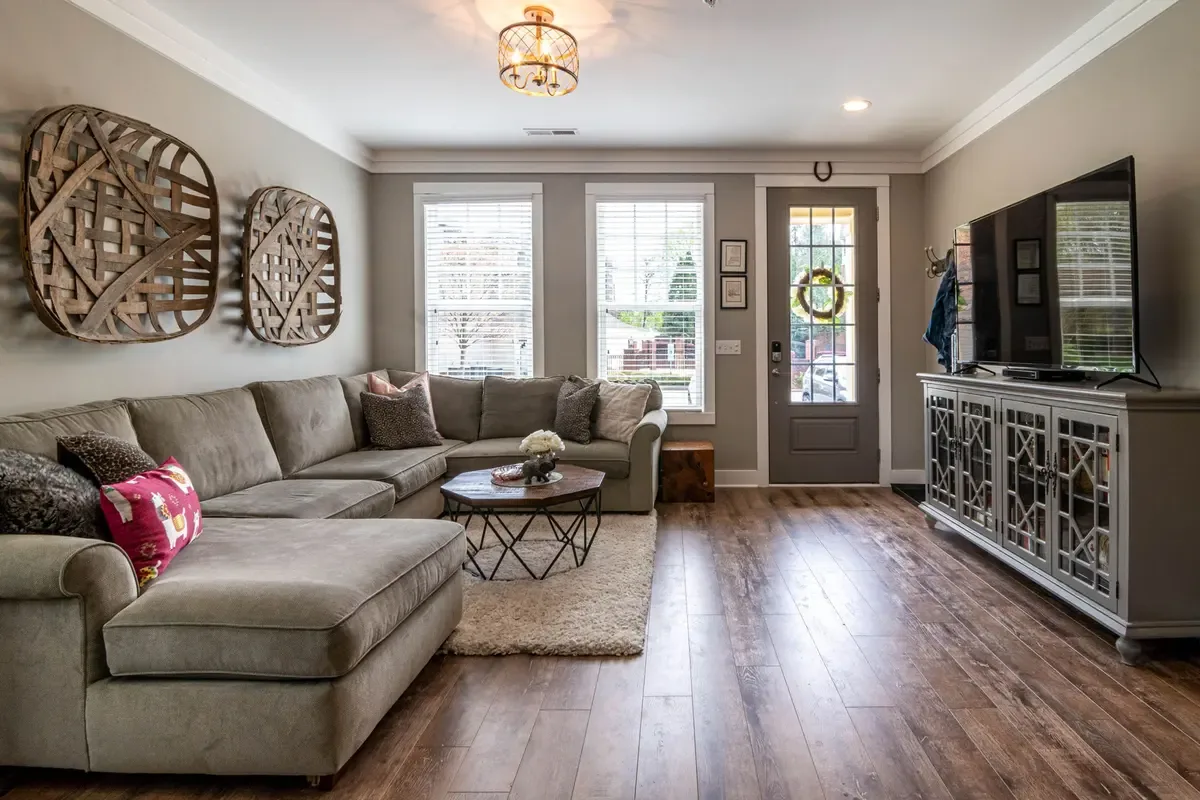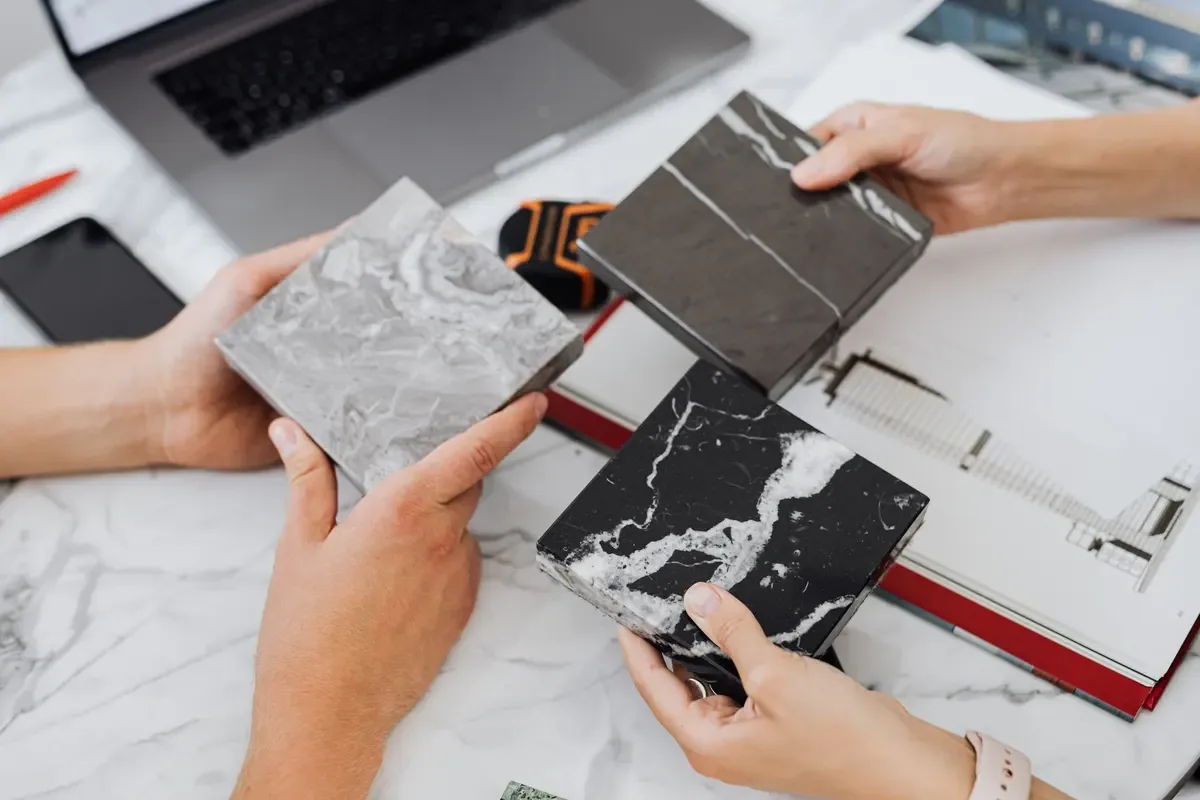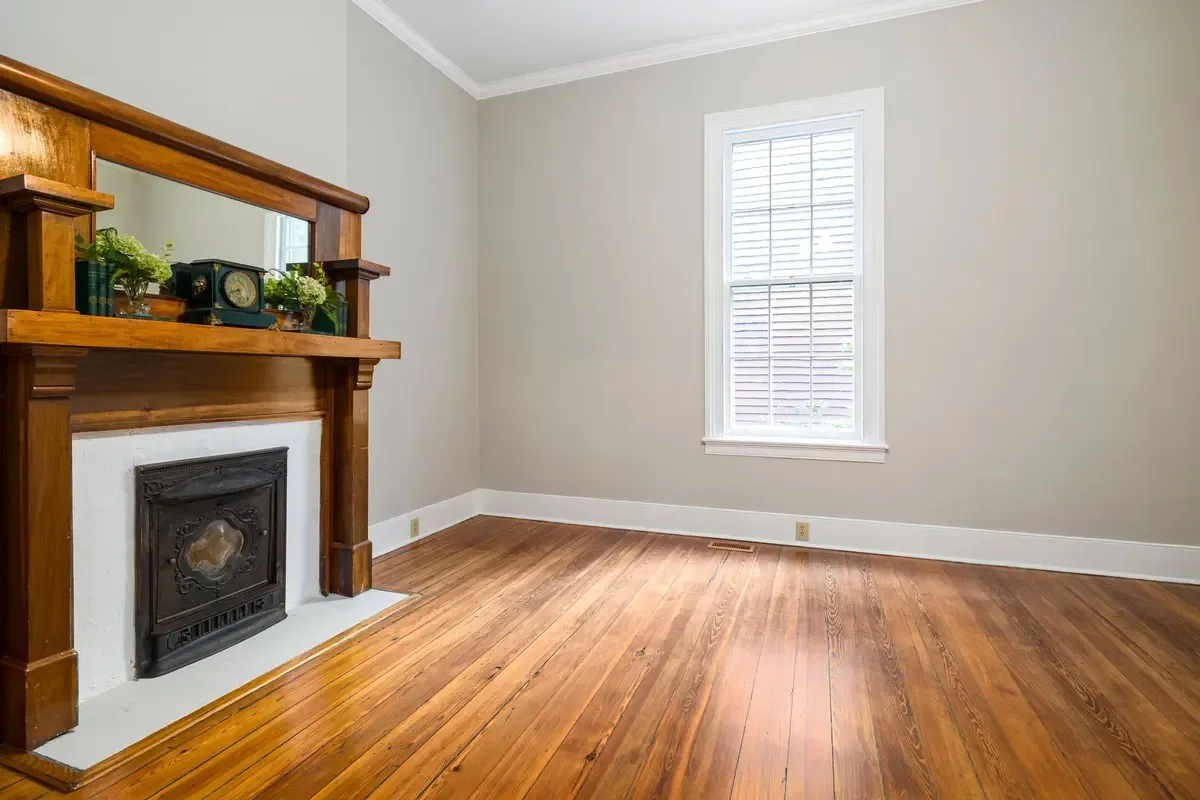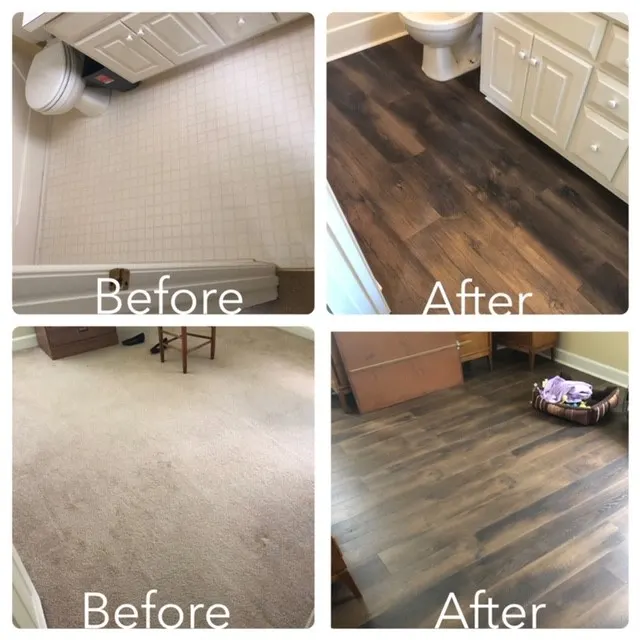
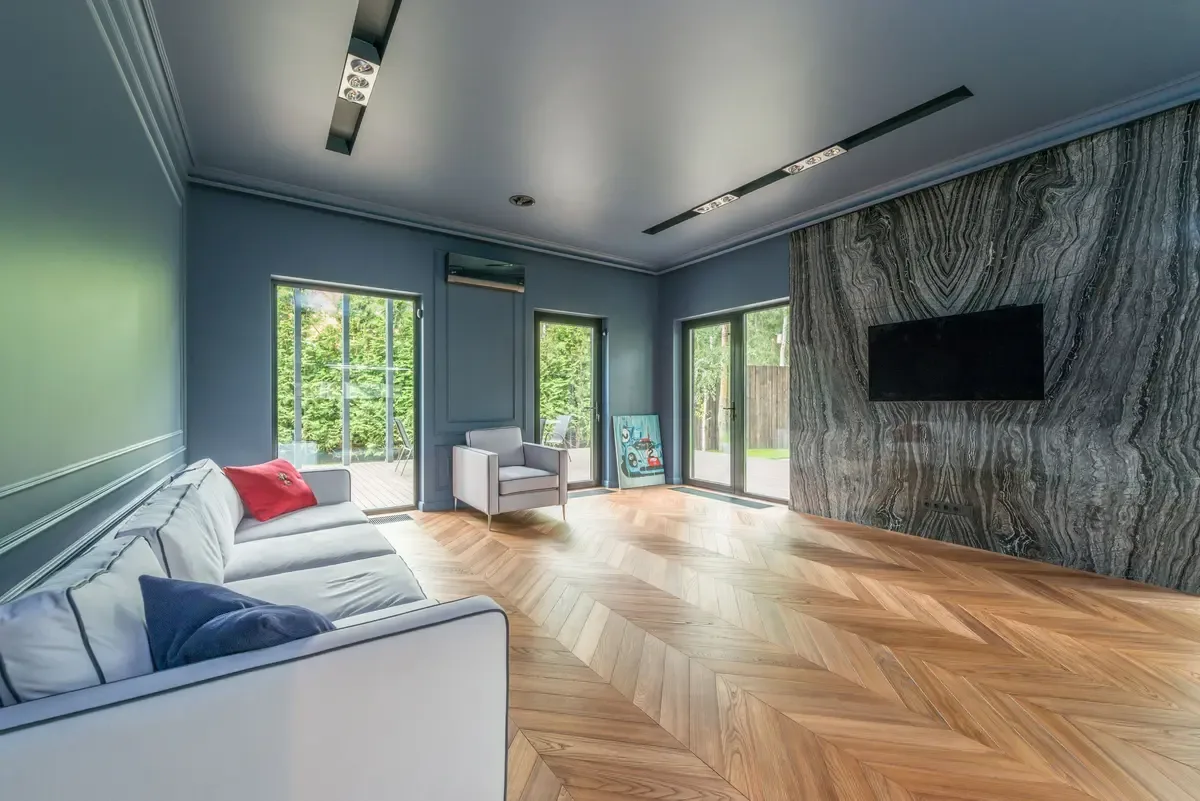
If your house has kids, dogs, a back door that opens to a red clay yard and a kitchen that never really closes, you are probably choosing between luxury vinyl plank (LVP) and laminate. They look alike from across the room. Both click together as floating floors, and both are made to look like wood. Underneath, they are different products, and those differences decide which one belongs in each room.
This guide walks through how each floor is built, how it handles water, scratches and North Carolina humidity, and where we usually suggest one over the other.
What is the difference between LVP and laminate?
LVP is a layered floor with a printed wood or stone image under a clear wear layer. Below that sits the core. Most of today's rigid-core LVP uses a stone-polymer or similar core that does not absorb water.
Laminate also has a printed image under a hard, clear surface. The difference is the core, which is high-density fiberboard, a wood-based product. It gives laminate a firm, solid feel underfoot and a very hard surface, but wood fiber can swell if water gets into it.
Both float over the subfloor rather than being nailed down, which makes them a practical choice over both crawlspace subfloors and concrete slabs.
Which handles water better?
LVP, in nearly every case.
A rigid-core LVP plank does not swell when water sits on it. A tipped-over water bowl, a dripping dishwasher or a toddler's juice cup is a wipe-up, not a repair. Our luxury vinyl plank page covers the wear layers and cores we install.
Laminate has improved a great deal. Many newer products are sold as water-resistant or even waterproof for a stated number of hours, with tighter joints and treated cores. They handle normal spills well if you clean them up. But if water sits on the seams long enough to reach the core, a laminate plank can swell at the edges, and swollen laminate does not go back down.
Neither floor stops water from below. A burst supply line or a leaking water heater will get under any floating floor, and the subfloor has to dry before anything goes back down.
Which is more scratch-resistant?
This is where laminate often wins.
A good laminate has one of the hardest wear surfaces of any residential floor. It stands up well to claws, chair legs and the grit that comes in on shoes. If you have large dogs and the room stays dry, laminate deserves a close look.
LVP scratch resistance depends on its wear layer. A thicker wear layer resists scuffs much better than a thin one, and a textured, matte surface hides small marks that a glossy plank would show. When you compare LVP samples, ask about the wear layer, not just the overall thickness.
For either floor, red clay is the real enemy. Gritty clay tracked across a floor acts like sandpaper. Mats at every door do more for the life of the floor than any label.
How does North Carolina humidity affect each floor?
Triangle summers are long and humid. Winters bring dry, heated air indoors. Floors that respond to moisture feel both.
LVP barely notices humidity. It does respond to temperature, so it needs the expansion gap the manufacturer specifies, especially in sunrooms and rooms with big south-facing windows.
Laminate is far more stable than solid wood, but its fiberboard core still responds to moisture over time. Over a damp crawlspace, that can mean slight peaking at the seams. Over a slab, laminate always needs a moisture barrier. With a dry crawlspace, the right underlayment and normal heating and cooling, laminate performs well here.
Either way, it is worth checking the crawlspace before a new floor goes in. A vapor barrier on the ground and good drainage away from the foundation protect any floor above.
Which rooms suit LVP and which suit laminate?
Most homes do not need one floor everywhere.
When LVP makes more sense
- Kitchens, full bathrooms and laundry rooms.
- Mudrooms and back entries where wet boots come in.
- Basements and slab-on-grade rooms.
- Long, continuous runs through the main level, kitchen included.
- Homes with a puppy, an older dog or a pet that has accidents.
When laminate makes more sense
- Bedrooms, living rooms, dens and home offices where water rarely sits.
- Homes with big dogs, where scratch resistance matters most.
- Rooms where you want a firm, solid feel underfoot.
- Projects where you want a convincing wood look without the cost of hardwood.
Our laminate page goes further into products and installation.
Can you mix LVP and laminate in one house?
Yes, and plenty of homes do: LVP in the kitchen, baths and laundry, laminate in the bedrooms and living areas. The key is planning the transitions. We look for tones that sit well together, place the change at a doorway rather than in the middle of a room, and keep the height difference low so nobody trips.
What about stairs?
Stairs are where many busy households feel wear first, and they need planning with the floor. Floating floors cannot simply be clicked onto a stair tread. Each step needs a tread and riser, or a stair nose matched to the plank, fastened securely so it does not move. LVP has more matching stair parts on the market than most laminates, which can make it the easier choice when a staircase runs off the main level.
If your stairs are carpeted and you want them to match the new floor, bring that up early. Our stairs and trim page explains the options.
Does the subfloor matter?
Very much. Both floors need a subfloor that is flat within the manufacturer's tolerance. On a crawlspace home, that means checking for soft spots, squeaks and high seams. On a slab, it means grinding ridges and filling dips. A floating floor laid over an uneven surface flexes as you walk, and that hollow, clicking sound people complain about is usually a subfloor problem, not a plank problem.
That is why removal and prep belong in the same plan as the new floor. Our floor removal team handles tear-out and haul-away so the prep is done right.
How do you decide?
A simple rule of thumb:
- If the room sees water, choose LVP.
- If the room is dry and you want the hardest surface, look closely at laminate.
- If you are unsure, compare samples of both in the room itself.
That last step matters. A plank that looks warm in a showroom can look gray next to your cabinets. At Southern Flooring Solutions, Tim and Sandy bring LVP and laminate samples to your home through shop-at-home, or you can borrow samples through sample checkout. We sell first-quality products only, never discontinued lines, and jobs sold at the initial in-home consultation carry a lifetime labor warranty.
If you live in Raleigh, Garner or nearby, request a free in-home estimate and we will look at the subfloor and talk through each room with you.